loading...
How To Get Ready For VLSI/ Semiconductor Industry??Today, VLSI devices are found everywhere around us. We find VLSI chips in our cell phones, household appliances, cameras, cars, and in even medical devices. This rapidly evolving sector offers many exciting opportunities in verification based jobs for those with strong fundamentals in electronic circuit design and hardware description languages, interest in VLSI design and verification and more importantly, the skill to put know-how of VLSI concepts to practice.
With the advances being made in technologies and product innovations on a daily basis, there is a constant need to design, develop and re-engineer integrated circuits (ICs). Since products like mobile phones are being released with new features in increasingly shorter cycles, there is a healthy demand for qualified very large scale integration (VLSI) engineers to work on these products. Therefore there is good scope for a career in the VLSI industry.
The essence of VLSI is in practical product development, practical mind-set is more important than the theoretical knowledge. Most of Indian universities focuses to give theoretical knowledge to student, instead of core practical and development skills to develop their career. That is the only biggest barrier today in India for students to enter into VLSI field.
There is a huge gap between industry and academia that is why there is difficulty for freshers to crack interview easily.The VLSI field offers exciting growth opportunities for engineers who are strong in electronic design fundamentals, have an interest in VLSI design and verification and know how to apply VLSI concepts to practice.
Now the question that pops up is "HOW TO GET READY FOR VLSI/SEMI-CONDUCTOR INDUSTRY?
Apart from these, one need to continuously have a check over the job description as provided by different companies. Try to bridge the gap between the industry demands and academics by clearing the basics and focusing on the skills mentioned above. Following this make you ready for VLSI.
 Choosing the Right VLSI Training Institute: Factors to Consider
 VLSI Design for Energy-Efficient Wireless Sensor Networks
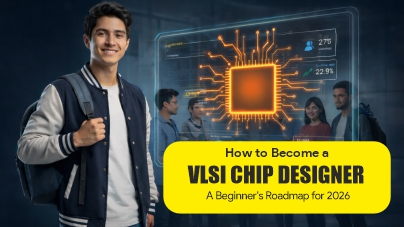 How to Become a VLSI Chip Designer: A Beginner's Roadmap for 2026
 A to Z on India, Japan & the Future of Semiconductor Industry: A New Chapter in Tech Collaboration
 RTL Design vs Physical Design: What's the Real Difference?
 The Future of the Semiconductor Industry: What Indian Students Should Know
 Top 7 Career Paths After Completing a VLSI Course
 Best Time Management Tips for Students Preparing for VLSI Careers
 Mastering VLSI Physical Design: A Comprehensive Course Overview
 The Complete FPGA and ASIC Guide
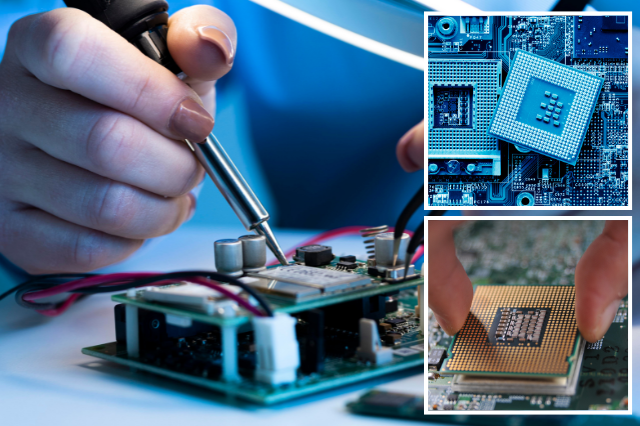 Verilog Essentials: Mastering the Fundamentals of Hardware Description Language
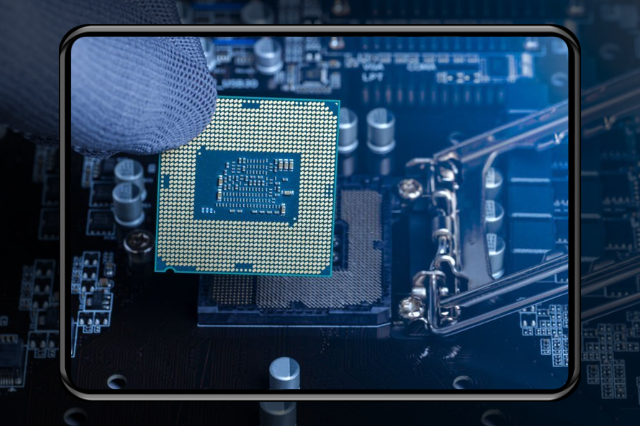 Unleashing the Power of System Verilog: A Comprehensive Guide for Aspiring Designers
 Demystifying VLSI chip Design: Exploring the Core Concepts of VLSI Courses
 Basics of VLSI - An Ultimate Guide
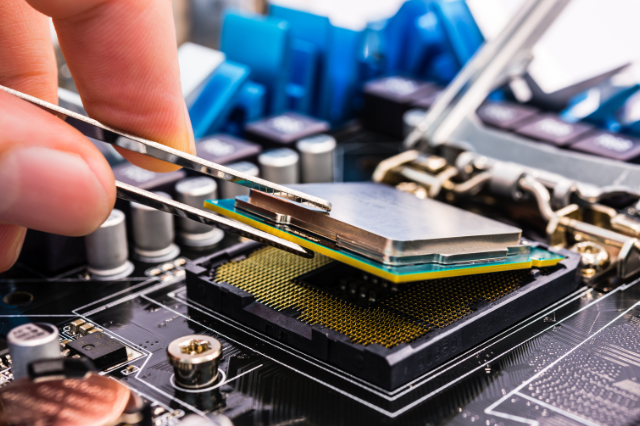 Career Prospects After Completing A VLSI Course
 Top 5 Reasons To Take Up A Professional VLSI Course
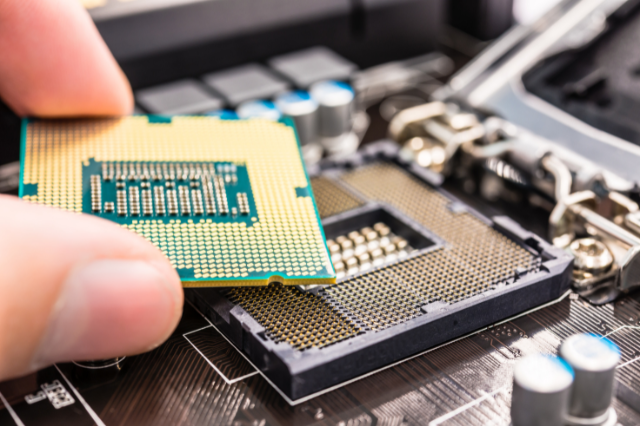 Mastering VLSI Design: A Comprehensive Guide To Understanding Complex Integrated Circuits
 Future-Proof Your Career With A VLSI Course: How Learning About Integrated Circuits Can Boost Your Job Prospects?
 System Verilog: An Overview
 Introduction to Hardware Description Language (HDL)
 Unlock The Potential Of VLSI Design With An Integrated VLSI Course Online
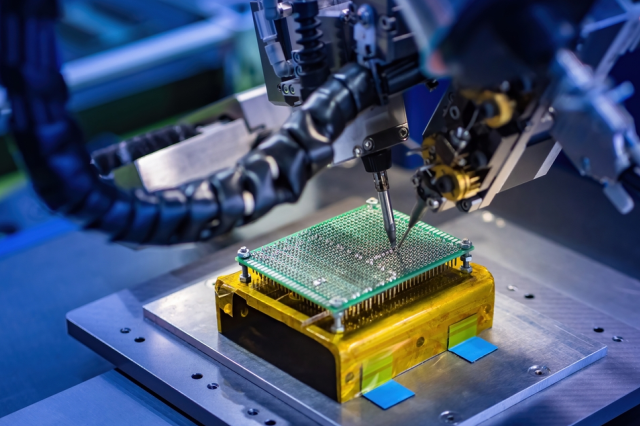 Universal Verification Methodology:An Efficient Verification Approach
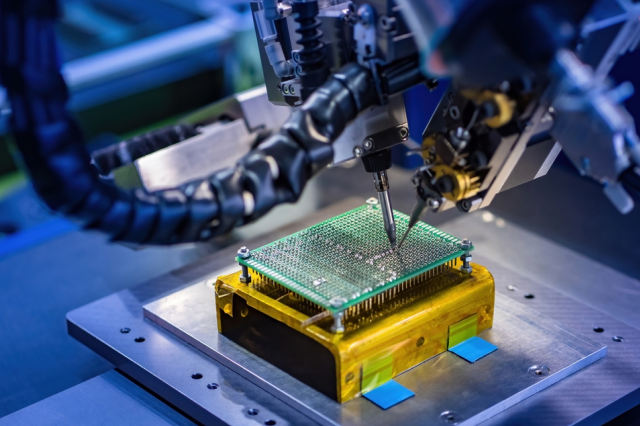 How to Write a Verilog Module for Design and Testbench